
A leading personality of the international culture
Despite his strong ties to his Emilian roots, Cesare Zavattini’s cultural experience was characterized by a remarkable international outlook. The writer from Luzzara established himself as an authentic “global icon” of cinematic Neorealism, while his work as a whole was marked by a distinctly transnational character.
Zavattini’s activity outside Italy was extensive, leading him to develop a wide network of exchanges and connections, particularly within Ibero-American cultural circles (Spain, Cuba, Mexico and Argentina) and Eastern Europe (Hungary, Romania, Czechoslovakia, Yugoslavia and the Soviet Union), but also in the Anglo-Saxon world (Great Britain and the United States), as well as in other European countries (France, Germany, Switzerland, Sweden and Austria) and non-European contexts, including Africa. In these countries he pursued projects and collaborations, above all, though not exclusively, in the field of cinema. It is therefore no coincidence that Zavattini’s biography is marked by frequent and intensive journeys abroad, during which he established a vast network of relationships and became part of cosmopolitan cultural circuits.
The Zavattinian transnational networks
The vast correspondence preserved in the Zavattini Archive — around 12,000 correspondents and more than 100,000 documents — reflects the extraordinary complexity of the artist’s relationships, which extended not only across different geographical areas but also throughout a variety of cultural fields: cinema, literature, art, publishing and more.
In this sense, the “Zavattinian factory” involved various forms of connection: on the one hand, with foreign bodies, institutions and organizations with which Zavattini maintained relationships, including film institutes (the Cuban Institute of Art and Film Industry), film production companies (the Spanish Unión Industrial Cinematográfica, the Algerian Cinémathèque Algérienne and the American Transcontinental Film), film festivals (Karlovy Vary in Czechoslovakia), committees supporting political causes (the Italian Anti-Colonial Committee and the Committee of the Western European Conference for Spain) and associations (the Italy-USSR Association, the Association Internationale des Documentaristes and the Italy-Algeria Association).
On the other hand, he established relationships with leading figures in the cultural life of the countries he visited, including filmmakers (the Argentine Fernando Birri; the Cubans Alfredo Guevara, José Massip and Julio García Espinosa; the Spanish Luis García Berlanga and Ricardo Muñoz Suay; the Americans Herbert Biberman and John Cassavetes; and the Czechoslovak Jiří Weiss), film producers (the Americans David Selznick and Paul Graetz, the Swiss Arthur Cohn and Lazar Wechsler, and the Egyptian Ramses Naguib), writers (the Colombian Gabriel García Márquez and the Spanish Alonso Ibarrola), photographers (the Americans Richard Avedon, William Klein and Duane Michals), film critics (the French André Bazin and Georges Sadoul) and artists (the French Jean Dubuffet, the Spaniard Joan Miró, the American Saul Steinberg, and the Mexicans David Alfaro Siqueiros and Diego Rivera).
Within Zavattini’s dense network of relationships, his connections with cosmopolitan Jewish circles were also particularly significant, and their extensive ramifications had a decisive influence on his artistic activity. Examples include his friendship with the American photographer of Bohemian Jewish origin Paul Strand, with whom he created the photographic book Un paese, and his relationship with the graphic designer Leo Lionni, who was of Jewish origin.
Zavattini’s international activities
It was through his journeys abroad that numerous international initiatives developed, including meetings and location scouting for film projects, participation in conferences and congresses, presentations of films and books, painting exhibitions, collaborations with magazines, the organization of international film co-productions, the training of filmmakers and documentary makers from decolonized countries, and the receipt of awards and prizes.
This broad range of experiences included some particularly significant practices, such as the “investigative journey”, undertaken to test Neorealist methods in contexts outside Italy, including Spain and, especially, several Latin American countries. Another important experience was Zavattini’s journey through France and the Netherlands in 1950, in preparation for a film project on Van Gogh, during which the Emilian author was able to refine his methodology of “ethnographic research”.
It would, however, be reductive to limit Zavattini’s commitment to the strictly artistic sphere. At the same time, his determination to influence political and cultural organization within the historical context of the Cold War, marked by the antagonism between the United States and the USSR, clearly emerges.
From this perspective, his intense activity in relations with Eastern Europe through Italian-Soviet cultural cooperation is of particular interest, as is demonstrated by the numerous international awards he received beyond the “Iron Curtain”. Equally significant was his extensive commitment to the processes of decolonization in Africa, Asia and Latin America between the 1950s and 1970s. Zavattini participated in and promoted initiatives at both national and international level in support of the liberation struggles of African peoples and, more broadly, against colonialism and racism and in favour of the independence of the peoples of the Third World.
The reception of Zavattini’s work abroad
In the international context, numerous elements testify to the circulation and reception of Zavattini’s work in relation to the “global” dimension of Neorealism and its diffusion during the second half of the twentieth century.
Abroad, Zavattini’s name remains primarily associated with his cinematic work as one of the leading figures of Neorealism, sometimes overshadowing the creative complexity of the Emilian author. Despite his firmly established Neorealist reputation, however, the international success of Zavattini’s artistic production as a whole — from literature to painting — is undeniable.
In particular, the international impact of Zavattini’s literary work appears significant, thanks to translations produced by intellectuals and writers from a variety of cultural backgrounds. Particularly relevant is the influence exerted on Latin American literature and on Gabriel García Márquez.
What emerges as a whole is the transnational profile of an intellectual who promoted a genuine form of cultural diplomacy, closely connected to Zavattini’s role as an engaged intellectual within the historical reality of the Cold War.
For more information
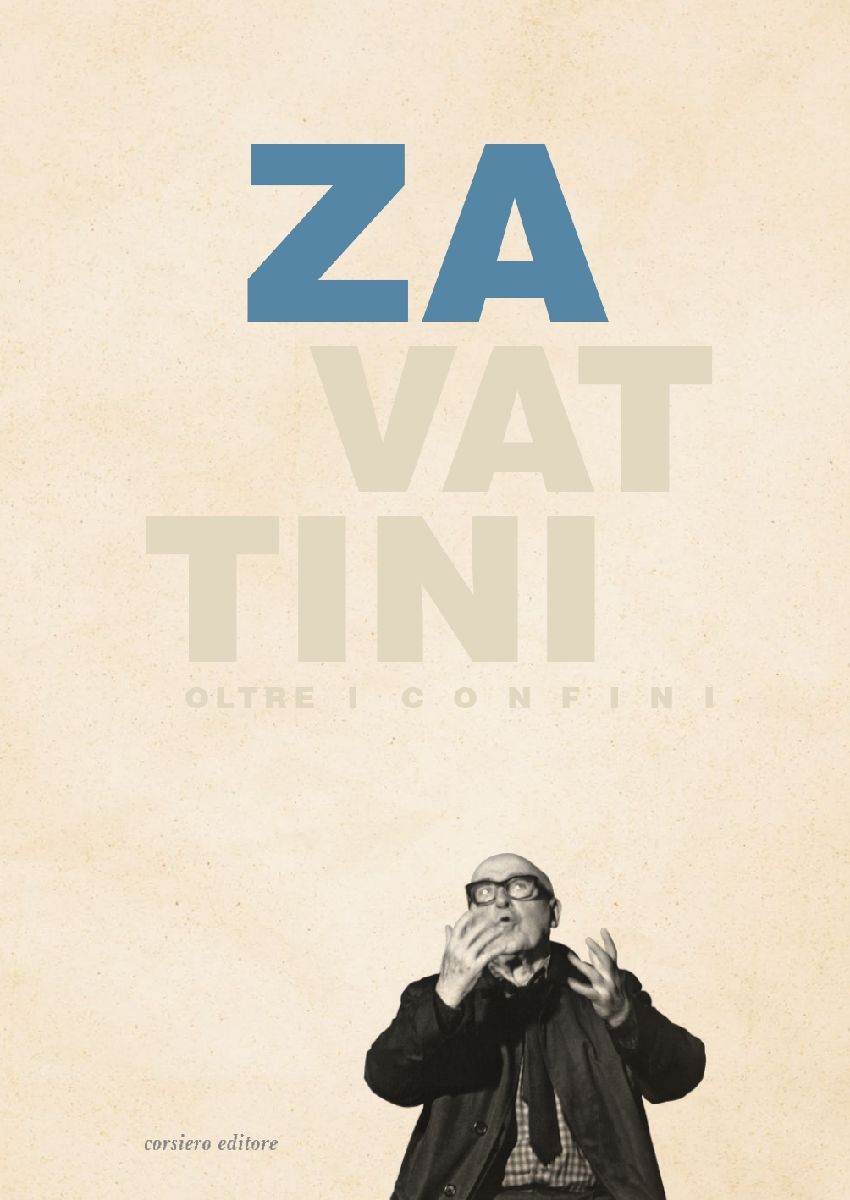
Catalogue
Zavattini Beyond the Boundaries – A Leading Personality of International Culture
Edited by Alberto Ferraboschi
Corsiero Editore
Italian and English editions
Format: 24 × 17 cm; 240 pages
Cover price: €28
Discounted exhibition price: €25
Available in bookstores and online:
Search for the catalogue on Amazon
Search for the catalogue on IBS
Exhibition